
A Private Chef for the Night: Birthdays, Anniversaries and Milestone Dinners at Home
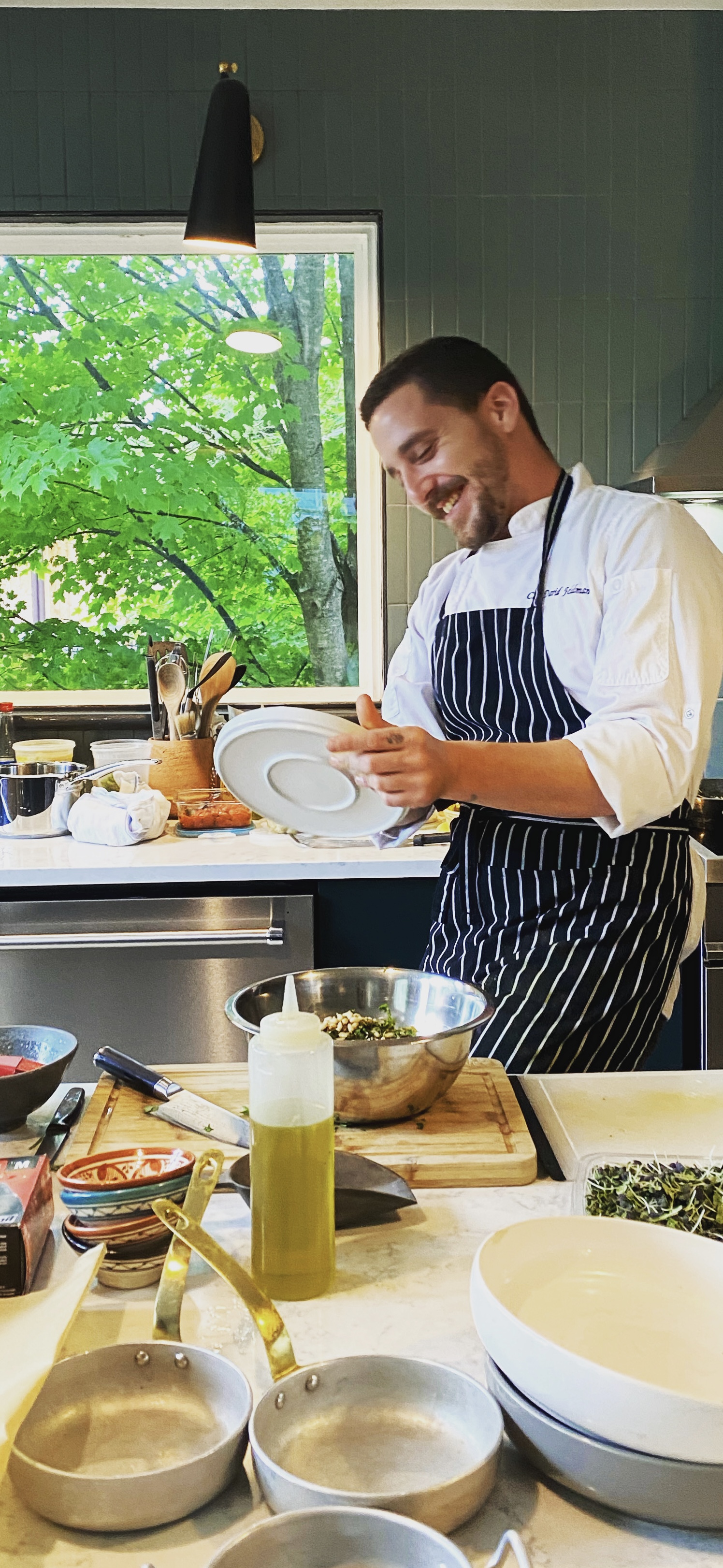
How to plan a birthday, anniversary or bachelorette dinner around the person at the head of the table.

Somewhere around the third course, the room goes quiet for a moment. A plate has arrived that the guest of honour recognises before anyone explains it: the dish their mother made on Friday nights, or the one from the trip where everything began, cooked now with a care it never had at home. Then the explanation comes, and the table laughs, and someone starts a story that has been told at every family gathering for forty years.
A restaurant can give you a beautiful dinner. It can't give you that one, because a restaurant's menu was written before it knew who was coming. A private chef's menu is written afterwards, and at a milestone, that order of events matters more than anything on the plate.
This guide is about planning that kind of evening: a fiftieth birthday, a twenty-fifth anniversary, a parent's seventieth, a bachelorette dinner, a dinner for ten or more adults built around one person. It covers how to brief a chef about someone you love, which format suits which celebration, and how to keep a surprise a surprise when the party is in your own home.
Why a milestone belongs at home
Some reasons are practical. Nobody watches the clock for the next seating. Grandparents don't have to cross the city late at night, children can leave the table and come back, and a speech can run as long as the family needs it to. Others are harder to name. The guest of honour sits at the head of their own table, in the room where much of the life you're celebrating actually happened.
One practical note first. Chef David cooks for ten adult guests or more, so a candlelit dinner for two (an anniversary, Valentine's Day) is better served by one of the city's good restaurants. The same week works beautifully, though, if what you're planning is a dinner for a group: friends marking a decade together, a family anniversary, a bachelorette dinner before the wedding weekend.
And if the celebration has grown into a party with a venue, a dance floor and a hundred guests, it has become an event. That belongs with KEDMA, Chef David's catering company; the last section explains where the line usually falls.
Start with the person
Before a milestone dinner, a chef needs a portrait more than a shopping list: a few honest paragraphs about the person you're celebrating. Four questions get you most of the way there.
What did they grow up eating?
Childhood food carries more meaning than almost anything else on a plate. A family's Shabbat chicken, a grandmother's stuffed vegetables, a soup that appeared every time someone was ill. You don't need a recipe, and the dish doesn't need to be reproduced exactly; often it works best as a reference, recognisable but finished with more technique than a home kitchen usually allows.
Where have they been?
A honeymoon in Greece, a year in Paris, the trip to Tel Aviv everyone still talks about. Places are easy to cook toward, and they make good conversation when the course arrives.
What do they love but never order?
Everyone has one: the dish they'd eat every week if someone else made it, or the indulgence they skip on a menu because it feels like too much. A milestone dinner is the night for it.
What won't they eat?
Allergies, strong dislikes and how the guest of honour (and everyone else at the table) eats. Gluten-free, dairy-free, vegetarian and vegan dishes are all possible. Our menus are kosher-style, prepared with Glatt Beit Yosef meats. Mashgiach supervision can be arranged upon request. Relatives with particular requirements are best asked early, so their standard shapes the plan from the beginning.
Three or four good answers to these will shape a menu more than any amount of browsing sample menus.
From a life to a menu

Chef David learned to cook in his mother Esther's kitchen in Haifa, and it was she who taught him that food is a bridge between people. At a milestone dinner that idea becomes quite literal: the menu connects a life to the people gathered to celebrate it. His own cooking, Israeli and Middle Eastern at heart and French in technique, already draws on the Jewish and Mediterranean table: challah and salatim, Moroccan fish and slow-braised brisket all appear on his menus. A request drawn from a family's history isn't a novelty in that kitchen. It's a natural starting point.
Two things help as you share your ideas.
First, a menu built around a person is a translation, not a reproduction. If the brief is "my father's favourite lamb", the course might keep the spices and the spirit of the dish and change everything else about how it's cooked and plated. That's usually what makes it moving rather than merely familiar.
Second, Chef David buys for each menu from what's best at the market that week. Some memories are seasonal (the tomatoes of a summer honeymoon, the citrus of a winter wedding), and those are easier to honour when the date and the season line up. Share the memory anyway; the menu will find the right expression of it for the time of year.
Choosing the shape of the evening
The same guest list can have very different evenings depending on how the food arrives.
A chef's table tasting menu
Course after course, plated, each one introduced at the table. For a milestone, this format does something no other can: the reason each course is there gets said out loud. It suits anniversaries and birthdays where the menu itself is part of the gift, and evenings where the guests are happy to stay seated and let the night unfold in chapters.
Platters down the middle

Big platters passed along the table: salatim and warm bread, then mains to share, then something sweet. It's warmer and louder, it suits family birthdays and reunions, and it's the easiest format for a table with a wide range of ages and appetites.
A mix of both
Shared plates to open, a plated main that carries the evening's most personal dish, then dessert to the middle of the table. Many milestone dinners land here: formal enough to feel like an occasion, relaxed enough to feel like home.
A rough guide, if you're undecided:
The occasion | Often suits |
|---|---|
A significant anniversary | Tasting menu, or a mix with a plated centrepiece |
A parent's or grandparent's milestone birthday | Family-style, or a mix |
A fortieth or fiftieth with close friends | A mix |
A bachelorette dinner | Family-style, with shared plates and plenty of conversation |
Keeping a surprise in your own home

Surprises at home have their own logistics, and they're worth planning with the chef from the first conversation. Arrange calls and messages at times the guest of honour won't see them. Then work through the evening itself:
The reason to be out. The guest of honour needs a plausible reason to leave the house while the team sets up, and a plausible reason to come home at the right moment.
The kitchen. An open-plan kitchen is hard to hide. Decide whether the surprise is the guests, the chef or both, and plan the reveal around that.
The guests. Ask them to arrive well before the guest of honour, with clear instructions about where to park and where to wait.
The signal. One person, and only one, sends the "ten minutes away" message.
Time the first course for shortly after the reveal. The surprise lands, the room settles, and then dinner begins, which turns the meal into the second part of the gift rather than an interruption of the first.
One table, three generations
Milestone dinners often seat grandparents, parents and children together, and the table works best when the evening is paced for all of them.
Older guests often prefer to eat earlier, and children can't wait long between courses. Service at a private dinner follows the table rather than a kitchen clock, so tell the chef who's coming and the pace will follow. For younger guests, a simpler version of what the adults are eating is often better than a separate menu; ask what's possible when you plan.
Seat the guest of honour where they can see the whole table, and the oldest relatives where they can hear. If some relatives keep strict kosher, bring it into the planning conversation early; what works for them depends on their own standard, which is a question for them and their rabbi.
Toasts, cake and the moment
Decide when the speeches happen before the evening starts. Just before the main course works well, when the room is settled and attentive. So does the pause between main course and dessert, when everyone has eaten and relaxed. What works badly is toasting while hot plates are on their way out of the kitchen; mention your plan, and the courses can be timed around it.
If there's a birthday or anniversary cake from a bakery that matters to the family, say so in advance, so dessert can be planned around it rather than on top of it.
What to send, and when
Milestone dates rarely move, and weekends and holidays fill first, so the earlier you ask, the better. When you get in touch, include the person as well as the plan: who you're celebrating and why, the date, the number of adults (and children, if any), where you'll host, whether it's a surprise, and what you know about how everyone eats.
If this is your first dinner with a chef in the house, our host's guide to hiring a private chef covers the practical side: what your kitchen will need, tableware and rentals, building access and what shapes the cost.
When the party outgrows the table
Some milestones outgrow even the longest dining table: a seventieth for a hundred and twenty, an engagement party with a band and dancing. At that size you're planning an event, with a venue and a service team to match. Celebrations on that scale belong with KEDMA, which caters bar and bat mitzvahs, engagements and milestone birthdays with a full events team.
Tell us who you're celebrating
Share a little about the person at the head of the table, the date you have in mind and how many people will be there. Chef David will reply with questions about them, a few first ideas and his availability.
Or call 916-633-9055.
Chef David Feldman cooks private chef dinners in NYC and across Brooklyn, Queens, Long Island, Westchester, Northern New Jersey and Connecticut, as well as in South Florida. He also cooks Shabbat and holiday dinners at home.


